Most people clean the sofa and call it done. It makes sense — it’s the biggest piece, the most visible, and the one everyone sits on. But the recliner in the corner, the upholstered dining chairs, the ottoman your kids use as a footrest and a snack table — those pieces are right there too, absorbing the same body oils, pet hair, and everyday grime. They just don’t get the same attention.
If you’ve ever had your sofa professionally cleaned and noticed the rest of the room suddenly looked a little dull by comparison, you already know what we’re talking about. Here’s a closer look at what furniture cleaning actually covers — and what most homeowners in Ventura County miss.
Upholstery Cleaning Covers More Than Just Your Sofa
The sofa gets all the attention because it’s the centerpiece of the room. But based on data from over 8,900 upholstery cleaning customers, sofas and loveseats account for just over half of all professional cleaning jobs — which means nearly half of the work involves everything else.
Armchairs, recliners, ottomans, benches, upholstered dining chairs, chaise lounges — these pieces accumulate the same embedded soiling as the sofa, but they rarely make it onto the cleaning list. The problem isn’t that people don’t care. It’s that the other pieces blend into the background.
You stop noticing the recliner because it’s always there. The dining chairs get wiped down after meals, so they feel clean. But surface cleaning and deep cleaning are very different things, and what lives inside the cushion fill and fabric weave doesn’t come out with a damp cloth.
Which Furniture Pieces Are Most Commonly Overlooked?
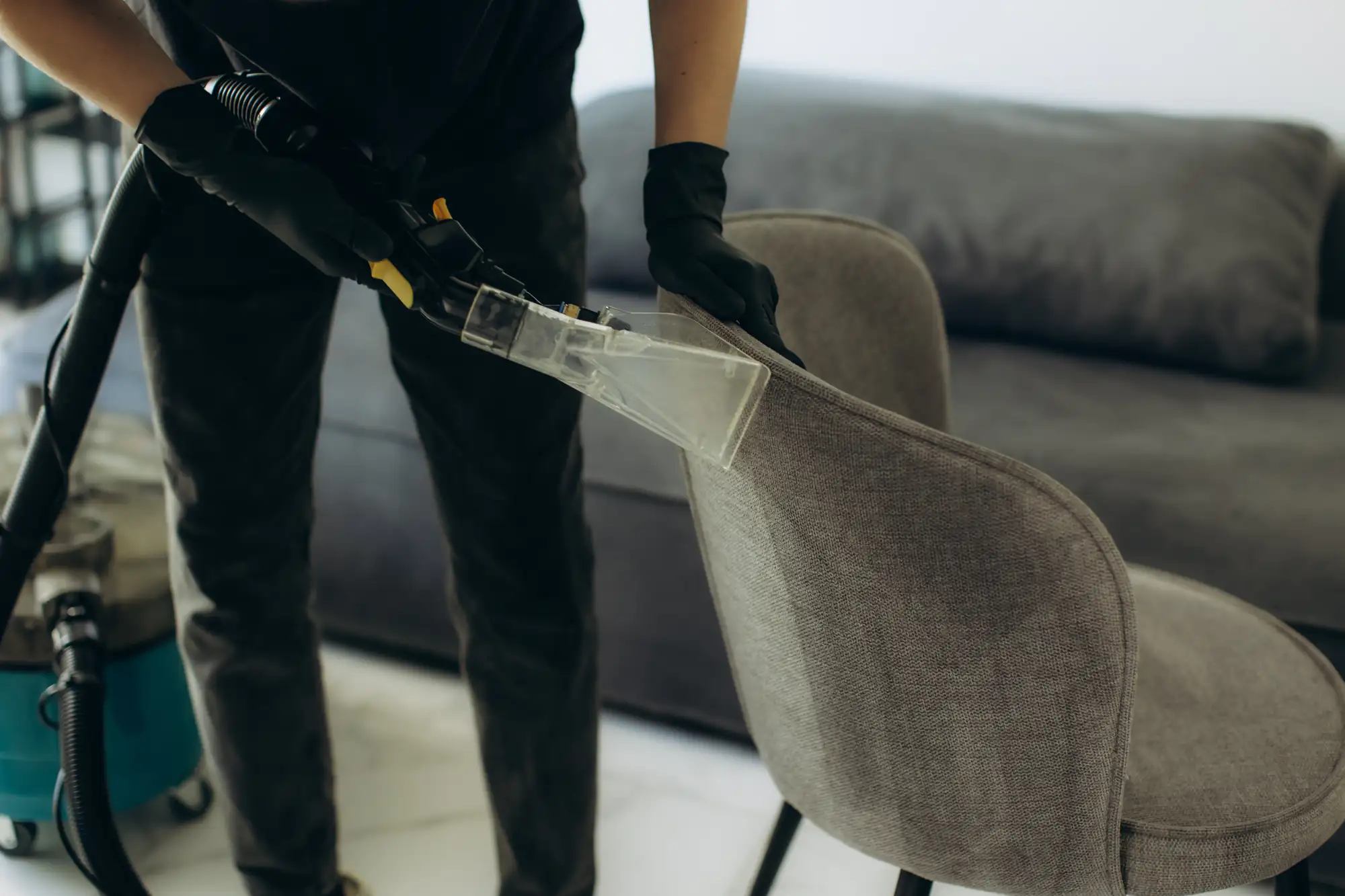
Dining chairs are probably the most overlooked upholstered surface in any home. People wipe the seats after meals, which handles the surface — but body oils, food residue, and moisture work their way into the fabric over time. In a household with kids or frequent guests, dining chairs can be among the most heavily soiled pieces in the room, even when they look relatively clean.
Recliners are another one. They get used constantly — often more than the sofa — but because they’re tucked to the side of the room, they tend to escape the “this needs to be cleaned” mental checklist. The same goes for ottomans. They double as footrests, coffee tables, and impromptu seating, and they collect everything from pet hair to spilled drinks to the oils from bare feet.
Loveseats are interesting because they often look cleaner than the main sofa simply because fewer people sit on them. But if you have a pet who’s claimed one end of the loveseat as their spot, the fabric tells a different story. Pet dander and oils from repeated contact build up in the same way they do on the sofa — they just do it more quietly.
Upholstered benches, whether at the foot of a bed or in an entryway, are in a similar category. Entryway benches especially take a beating — people sit on them in outdoor clothes, sometimes with shoes on, and they rarely get cleaned at all. The fabric on a well-used entryway bench can be surprisingly soiled even when it looks fine from across the room.
The point isn’t to make you feel like your home is dirtier than you thought. It’s that a full furniture cleaning pass — one that covers all the upholstered pieces in a room, not just the sofa — makes a much bigger difference than spot-treating the one piece you were already thinking about.
Why the Wrong Cleaning Method Can Permanently Damage Your Furniture
Every upholstered piece of furniture has a manufacturer’s cleaning code on its tag. Most people have never looked for it. The codes are simple — W means water-based cleaning is safe, S means solvent-based only, WS means both methods work, and X means the fabric should only be handled by a professional dry-cleaning process.
Using a water-based cleaner on an S-coded fabric, or running a rental machine over something tagged X, can cause permanent water rings, shrinkage, or color bleeding that no amount of re-cleaning will fix. This is the part of furniture cleaning that DIY approaches tend to get wrong — not because the person doing it is careless, but because consumer machines and off-the-shelf products aren’t designed to account for fabric type.
A rental machine applies water and suction without distinguishing between a polyester blend and a delicate microsuede. The results can range from “it didn’t do much” to “now there’s a water ring that wasn’t there before.”
Professional upholstery cleaning starts with a pre-inspection precisely to avoid this. Before any product touches your furniture, we evaluate the fabric type, check the manufacturer’s code, review the construction, and test a small hidden area for colorfastness. That process — which takes a few minutes but matters enormously — is what separates cleaning that restores a piece from cleaning that damages it.
We carry more than 30 specialized cleaning products on every truck, specifically because different fabrics require different chemistry. A microfiber sectional, a wool armchair, and a polyester dining chair don’t get cleaned the same way. Matching the product to the fabric is the foundation of doing this work correctly, and it’s something a one-size-fits-all approach simply can’t replicate.
If you’ve ever been hesitant to have a piece cleaned because you’re worried about damaging it, that instinct is reasonable. The solution isn’t to skip cleaning — it’s to make sure whoever does the work actually knows what they’re looking at before they start.