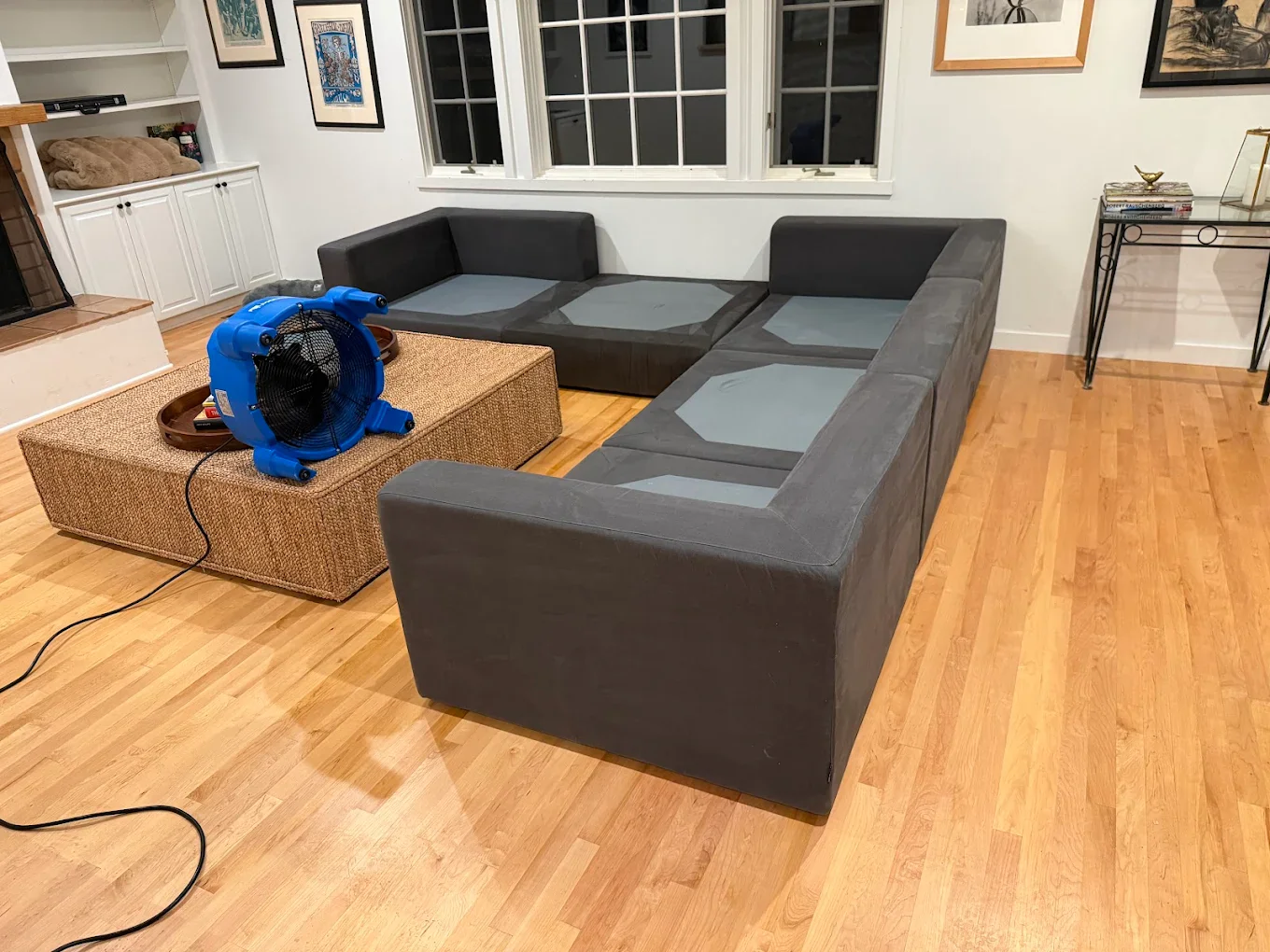
You cleaned your couch. You rented the machine, worked through the cushions, let everything dry — and now it smells like a wet basement. Or the stain you were targeting is still there, just slightly lighter. Or the fabric looks a little off and you’re not sure why.
This is one of the most common stories we hear. And it almost always traces back to the same two problems: the wrong method for the fabric, and not enough extraction power to actually remove what the machine put in. This post explains both — and what a professional clean actually does that a rental machine simply can’t.
Steam Clean Sofa: Why the Method Has to Match the Fabric
There’s a tag tucked somewhere on your sofa — usually under a cushion or along the frame — and it has a letter on it. W, S, WS, or X. Most people have never looked at it. That letter determines which cleaning method is safe for your fabric, and using the wrong one causes damage that can’t be undone.
W means water-based cleaning solutions only. S means dry-cleaning solvents only — no water at all. WS means either method works. X means no liquid of any kind; vacuum only. If you steam clean a couch with an S code, you’re introducing water to a fabric that was never designed to handle it. The result is water rings, color bleeding, pile crush, or shrinkage — and none of that reverses once the fabric dries.
Steam Clean Couch: What Actually Happens When You Use the Wrong Method
The damage from a fabric code mismatch doesn’t always show up immediately. Sometimes the couch looks fine when it’s wet, and the problem only becomes visible once it dries. By then, the water rings are set, the velvet pile has been crushed flat in patches, or the color has shifted in ways that don’t blend back in. There’s no fix for that — only reupholstering or replacement.
This is especially common with microsuede, velvet, and certain woven fabrics, all of which are popular choices in homes throughout Ventura County. These materials often carry an S code, which means any water-based steam — whether from a rental machine attachment or a handheld steamer — can cause permanent texture or color damage on contact.
The handheld steamers sold at hardware stores are the biggest culprit here, because they’re marketed as a versatile cleaning tool without any mention of fabric code compatibility. You point it at a stain, the steam hits the fabric, and if that fabric is solvent-only, you’ve just made a permanent problem out of a temporary one.
Professional cleaning starts with a pre-inspection — checking the care code, identifying the fabric construction, and assessing the soiling type before selecting any chemistry or method. That step alone eliminates the single most common cause of DIY couch cleaning damage. It takes a few minutes and it’s the reason we can work on a delicate velvet sectional with confidence while a rental machine has no idea what it’s touching.
The care code system exists because different fabrics are manufactured differently, respond to moisture differently, and break down differently under heat and agitation. A one-size-fits-all approach — which is exactly what rental machines offer — ignores all of that. It’s not that the machines are poorly made. It’s that they’re designed for general use, not for the specific fabric sitting in your living room.
Why Over-Wetting a Couch Is Worse Than Not Cleaning It at All
Here’s the part that most DIY guides leave out. When you run a rental machine over your sofa cushions, you’re injecting moisture into the fabric. The question is whether the machine is pulling that moisture back out — and for most consumer-grade equipment, the answer is not nearly enough.
Rental machine attachments are designed for general use. The suction power they deliver to an upholstery nozzle is a fraction of what our truck-mounted and van-mounted equipment produces. That gap matters because sofa cushions aren’t just fabric on the surface — they have foam backing, cushion fill, and interior layers that absorb moisture and don’t release it easily. When a rental machine leaves those layers wet, they stay wet. And in a dark, enclosed space with limited airflow, that’s exactly the environment where mold begins to grow.
According to the EPA, mold can start developing on wet organic material in as little as 24 to 48 hours under the right conditions. The inside of a sofa cushion — warm, dark, and now damp — qualifies. The result is the musty smell that many homeowners notice a day or two after cleaning, when the surface appears dry but the interior is still holding moisture. That smell is often worse than whatever the original soiling smelled like, and it doesn’t go away on its own.
This is one of the most documented reasons people in Ventura County end up calling us after a DIY attempt. We’ve heard versions of this story many times — someone rented a machine, cleaned the couch themselves, and called a week later because the smell had gotten worse, not better. At that point, the job is more involved than it would have been originally, because now we’re dealing with both the original soiling and the moisture damage layered on top of it.
Our hot water extraction uses controlled injection and immediate, high-powered extraction. The solution goes in and comes back out — along with the loosened soil, allergens, and odor compounds — before the foam and fill have a chance to absorb it. Drying times are significantly faster, which is something customers consistently notice and comment on. Less moisture in means less moisture to remove, and the interior of the cushion never reaches the saturation point that creates mold conditions.