
Welcome to Vanpro Carpet Cleaning, your locally owned and operated professional carpet & tile cleaning service based in Ventura, CA.
Contact Info
Most travertine damage doesn't happen from neglect. It happens from cleaning it the wrong way. Here's what you need to know before you reach for that mop.
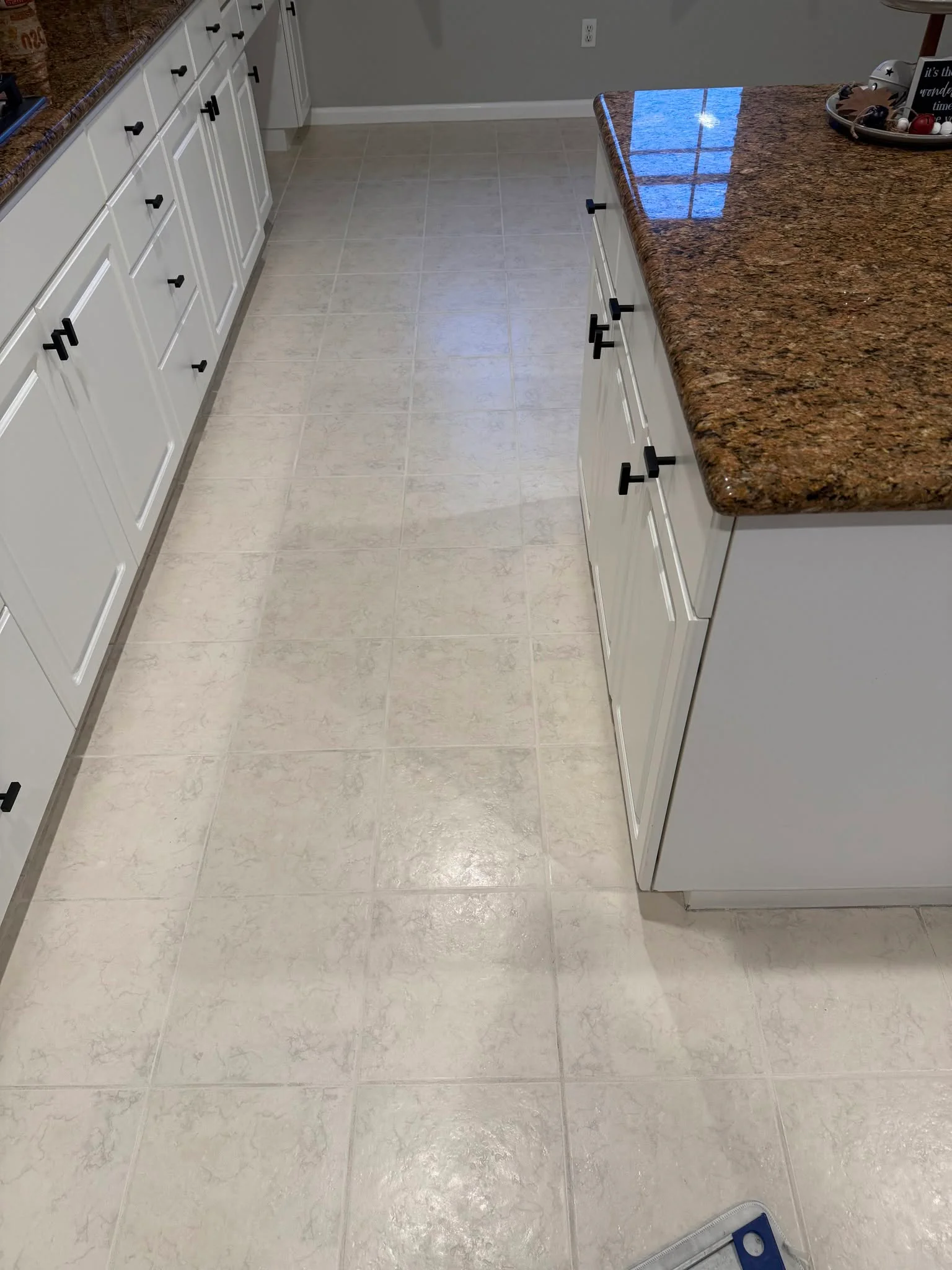
If you have travertine floors, there’s a good chance you’ve already done something to them that seemed completely reasonable at the time. Maybe you mopped with a citrus cleaner. Maybe you tried vinegar because someone online called it a “natural, safe option.” Maybe you used the same tile spray you use in the bathroom. And now there are dull patches, white spots, or a haze across the surface that wasn’t there before — and nothing you try is making it better.
That’s not dirt. That’s damage. And understanding the difference is the first step to actually fixing it.
Travertine is a type of limestone, which means it is made almost entirely of calcium carbonate. That single fact explains nearly every cleaning mistake people make with it. Calcium carbonate reacts chemically with acids — and that reaction is not subtle. It dissolves a thin layer of the stone’s surface, leaving behind a dull, rough, or discolored area called an etch mark.
The other thing that sets travertine apart is its porosity. When travertine forms underground near hot springs, carbon dioxide bubbles get trapped in the stone as it sets. Those bubbles leave behind tiny holes and channels throughout the material. That’s what gives travertine its characteristic texture — but it also means liquids, cleaning residues, and dirt can work their way into the stone rather than sitting on top of it.
These two characteristics — acid sensitivity and porosity — are why travertine cannot be treated like ceramic tile, and why so many well-meaning cleaning attempts end up causing more harm than good.
The list of products that can damage travertine is longer than most people expect. Vinegar is the most common offender — it gets recommended constantly as a green, natural alternative to chemical cleaners, and on many surfaces it works fine. On travertine, it causes etching almost immediately. The acetic acid in vinegar reacts with the calcium carbonate in the stone, and the result is a dull, whitish spot that is not a stain you can scrub away. It is physical damage to the stone’s surface.
Lemon juice and citrus-based cleaners do the same thing. So do many products marketed as “deep cleaning” or “grout-busting” formulas — they tend to be highly acidic because acid cuts through mineral buildup, which works great on ceramic but is destructive on natural stone. Even some products labeled as all-purpose or multi-surface cleaners contain ingredients that will etch travertine over time.
Steam cleaning is another common mistake. The appeal makes sense — steam feels thorough and chemical-free. But forcing heat and moisture into porous stone simultaneously weakens the surface and breaks down any protective sealer that is already in place. Once the sealer is gone, the stone is exposed, and staining becomes far easier.
Excess water is also a problem. Because travertine is porous, mopping with a soaking-wet mop can push water below the surface, where it sits and causes dark spots or uneven discoloration as it dries. The same issue applies to cleaning products that foam heavily or leave behind a residue — both can settle into the stone’s pores and create a buildup that looks like a stain but is actually trapped cleaning product.
What travertine actually needs is a pH-neutral cleaner specifically formulated for natural stone. The Natural Stone Institute has noted that neutral cleaners significantly reduce the risk of etching compared with standard household detergents. That one change — switching from a generic cleaner to a stone-safe formula — makes an enormous difference in how long a travertine floor holds up.
A lot of homeowners think of sealing as something a cleaning company tries to add on at the end of a job to pad the bill. It is not. Sealing is what protects the porous structure of travertine from absorbing liquids, staining agents, and cleaning residues in the first place. Without it, even the most careful cleaning routine is fighting an uphill battle.
A penetrating sealer works by filling the microscopic channels in the stone, creating a barrier that slows down liquid absorption without changing the appearance of the floor. It does not make travertine impervious — nothing does — but it gives you time to wipe up a spill before it becomes a stain. On an unsealed floor, that same spill can penetrate within seconds.
Travertine in high-traffic areas, kitchens, and bathrooms should generally be cleaned, honed or polished as needed, and resealed every two to three years. Outdoor travertine — pool surrounds, patios, walkways — faces far more aggressive conditions and may need attention more frequently. In Ventura County, homes near the coast deal with salt air that accelerates the breakdown of unsealed stone, and pool owners face the additional challenge of chlorine and pH-adjustment chemicals that are acidic and damaging to exposed travertine surfaces.
When we assess a travertine floor, checking the sealer condition is one of the first things we do. A simple water bead test tells a lot — if water absorbs into the stone quickly rather than beading on the surface, the sealer is gone and the stone is vulnerable. Getting it resealed before the next round of staining happens is always the better path than trying to remove stains after the fact.
Want live answers?
Connect with a Vanpro Carpet Cleaning expert for fast, friendly support.
There is a moment many Ventura County homeowners reach where they look at their travertine and think it needs to be replaced. The floors look dull, the finish is uneven, there are etch marks from years of wrong cleaners, and no amount of mopping seems to make a difference. Replacement feels like the only option.
In most cases, it is not. Professional stone floor restoration — which includes honing, polishing, and resealing — can bring severely degraded travertine back to a condition that looks, and feels, like new. Understanding what each of those steps actually does helps you figure out what your floors actually need.
Honing and polishing are two distinct processes that are often confused with each other, and the difference matters when you are deciding what your floor actually needs.
Honing is a grinding process. It uses abrasive pads to remove a very thin layer of the stone’s surface, taking etch marks, scratches, and surface irregularities with it. If your travertine has dull patches from acid exposure, or light scratches from years of foot traffic and furniture movement, honing is what addresses those. The result is a smooth, matte or satin finish — clean and even, but not reflective.
Polishing takes that a step further. After honing, the stone can be worked up to a higher grit, which creates a reflective, glossy surface. Polished travertine has a mirror-like quality that shows off the stone’s natural veining and color variation. Whether you want a honed or polished finish is largely a matter of taste and how the floor is used — polished surfaces show scratches and footprints more readily, while honed finishes are more forgiving in high-traffic areas.
Both processes are followed by sealing. There is no point in honing or polishing a floor and leaving it unsealed — the fresh surface is even more vulnerable than before, and without a sealer it will begin absorbing staining agents almost immediately.
It is also worth noting that honing and polishing are not the same as cleaning. A floor can be deep cleaned without being honed, and it can be honed without being polished. A professional assessment of the floor’s current condition — finish type, sealer status, extent of etching, and fill condition of the travertine’s natural holes — determines which combination of services is actually needed. That assessment is where the process starts, not with assumptions about what the floor must need.
Grout is its own challenge, and on travertine floors it is a particularly tricky one. Most commercial grout cleaners are acidic — they work by dissolving mineral deposits and soap scum, which is effective on ceramic tile but will etch the travertine adjacent to the grout lines. Using the wrong grout cleaner on a natural stone floor does not just leave the grout dirty; it damages the stone around it.
The best way to clean grout on travertine is with a pH-neutral cleaner and a soft-bristled brush, working carefully to avoid aggressive scrubbing that could scratch the stone’s surface. For grout that is heavily stained or discolored, professional grout cleaning uses specialized tools and stone-safe chemistry to lift the buildup without harming the surrounding tile.
Grout cleaning and sealing go together for the same reason stone sealing does — grout is porous and will reabsorb staining agents quickly if left unsealed after cleaning. Color sealing is an option for grout that has become permanently discolored; it applies a pigmented sealer that restores a uniform appearance and makes the grout significantly easier to maintain going forward.
One thing worth understanding about travertine specifically is that the stone’s natural holes — the voids left by those carbon dioxide bubbles during formation — are often filled with grout or a similar material during installation. Over time, that fill can come loose, crack, or discolor differently from the rest of the floor. Restoring filled travertine to a consistent appearance requires matching the fill material and color, which is a detail that matters more than most homeowners realize until they try to have someone address it.
Grout restoration on natural stone is not a job for a general-purpose cleaning product or a generic tile cleaning service. The chemistry has to be right, and the technique has to account for the stone surrounding every grout line. When it is done correctly, the difference is significant — clean, even grout lines change the entire appearance of a travertine floor.
If your travertine looks dull, has spots that won’t come out, or simply hasn’t been professionally cleaned and sealed in the last two to three years, it is worth having someone take a look before the damage compounds further. The longer etch marks, staining, and sealer breakdown go unaddressed, the more involved the restoration process becomes.
What you want in a stone floor cleaning company is someone who understands travertine specifically — not just tile in general. Someone who will assess the floor’s actual condition before recommending services, explain what they are doing and why, and use chemistry that is appropriate for natural stone rather than defaulting to whatever works on ceramic.
At Vanpro Carpet Cleaning, we have been doing this work across Ventura County for over ten years. William handles every stone job personally, from the initial assessment through cleaning, restoration, and sealing — no crews, no guesswork, no surprises on the bill. If you have questions about your travertine floors, or you are not sure whether what you are seeing is fixable, reach out to Vanpro Carpet Cleaning and we will tell you honestly what we are looking at and what it will take to address it.
—
FREQUENTLY ASKED QUESTIONS
Summary:
Article details:
Share:

