
Marble & Travertine Cleaning and Polishing Stop Guessing. Your Stone Deserves Better.
The wrong cleaner on your marble or travertine doesn't just leave a residue — it leaves permanent damage. We use the right chemistry for each stone type, so your floors come out clean, protected, and looking the way they should.

Owner Does Every Job
William Cave handles every stone cleaning personally — the same expert who assesses your floor is the one cleaning and sealing it.
Stone-Safe Chemistry Only
We match the cleaning solution to your specific stone type — no generic all-surface products that etch or dull sensitive surfaces.
Ten-Plus Years of Experience
Over a decade cleaning natural stone, tile, and grout throughout Ventura County, CA — including travertine, marble, slate, granite, and limestone.
Starts at One Dollar Per Square Foot
Stone and tile cleaning starts at $1.00 per square foot — a published price no local competitor will show you upfront.
Your Stone Isn't Dirty — It's Been Cleaned Wrong
Most natural stone floors that look permanently dull or stained aren’t beyond saving. They’ve been mopped with the wrong products for years. Vinegar, citrus-based cleaners, and “all-natural” sprays from the grocery store are among the most common causes of etching and discoloration on marble, travertine, and limestone — surfaces that react immediately to anything acidic.
Regular mopping doesn’t reach into the pores of natural stone. It moves surface dirt around without lifting the embedded grime, mineral deposits, and oils that build up over time. That’s why the floor never looks truly clean no matter how often you mop it.
We work with all types of natural stone — travertine, marble, granite, slate, limestone — across kitchens, bathrooms, entryways, showers, and outdoor living areas throughout Ventura County, CA. Every job starts with a surface assessment so we know exactly what we’re working with before we touch a single product to your floor.
What Changes After Professional Stone Cleaning
From dull and discolored to genuinely clean — here's what you'll notice once the job is done right.
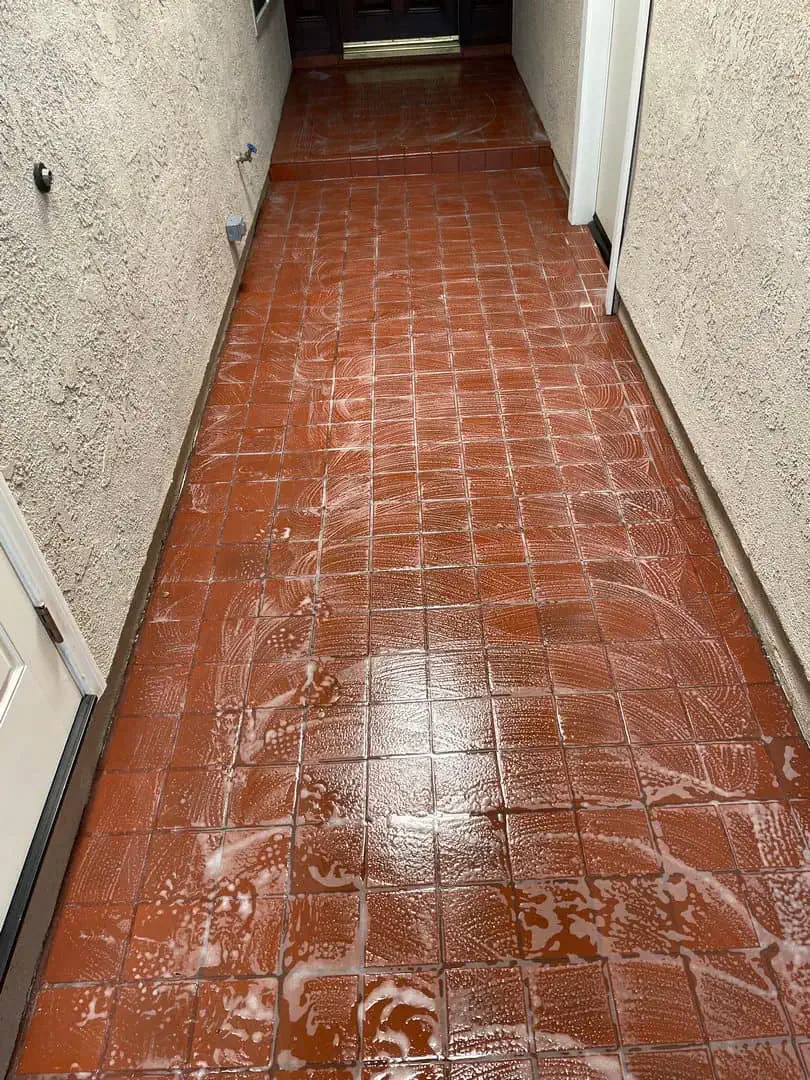
Your travertine or marble floors look the way they did when they were first installed — not just mopped.
Hard water mineral deposits and soap scum are gone from your stone shower walls without scratching or etching the surface.
A fresh penetrating seal goes on after cleaning, so spills and moisture can't work their way back into the stone's pores.
You'll know exactly which products are safe to use going forward — and which ones to keep off your stone for good.
Kids and pets can walk on the cleaned surface without exposure to harsh chemical residues — we only use products safe for both.
If you're preparing to list your home in Ventura County's competitive market, professionally restored stone floors make an immediate impression on buyers.

The $5 Bottle That Costs Thousands to Fix
Vinegar has a pH of 2 to 3. When it touches marble, travertine, or limestone — all calcium-based stones — it reacts immediately, eating into the surface and leaving dull, hazy etch marks that no amount of mopping will fix. The same is true for citrus-based cleaners, many “green” all-purpose sprays, and anything labeled “natural” that contains acidic compounds. The label doesn’t tell you what it does to your floor.
This is one of the most common reasons Ventura County, CA homeowners call us. They noticed the dullness, tried harder to clean it, made it worse, and now they’re not sure whether the damage is permanent. In many cases, early-stage etching can be addressed through professional honing and restoration. But the sooner it’s caught, the better the outcome.
We use pH-neutral, stone-specific cleaning solutions matched to your surface type — not a one-bottle approach. Calcareous stones like marble and travertine require completely different chemistry than siliceous stones like granite and slate. Getting that wrong isn’t a minor issue. It’s the difference between a clean floor and an expensive repair.
Stone Showers Need More Than a Scrub Brush
Ventura County, CA’s hard water is particularly rough on stone showers. The municipal water supply carries high levels of calcium and magnesium, and those minerals deposit on stone shower walls every single day. Over time, the buildup looks like it’s become part of the stone itself — white, grey, or chalky patches that don’t respond to standard bathroom cleaners. Soap scum layers on top of that, and the combination can look nearly impossible to remove without scratching the surface.
It isn’t impossible, but it does require the right process. We work through the buildup methodically — applying stone-safe solutions that break down mineral deposits without etching the surface, agitating the grout lines, and extracting the residue rather than just pushing it around. Once the surface is clean, we seal it so the next round of hard water has a harder time bonding to the stone.
If your stone shower looks like it hasn’t responded to cleaning in years, that’s not a sign the stone is ruined. It’s usually a sign it hasn’t been cleaned the right way yet.
Your Stone Cleaning Questions Answered
Can you use vinegar or all-purpose cleaners on natural stone floors?
No — and this is probably the most important thing to know about natural stone care. Vinegar has a pH of 2 to 3, which means it’s acidic enough to permanently etch calcium-based stones like marble, travertine, and limestone on contact. The same goes for citrus-based cleaners, many “natural” or “green” all-purpose sprays, and anything that contains acidic compounds — even if the label doesn’t make that obvious. Granite and slate are more resistant because they’re siliceous stones, but they’re not immune to damage from the wrong products either. For routine maintenance between professional cleanings, use a pH-neutral cleaner specifically formulated for natural stone. If you’re not sure what’s safe, we’re happy to walk you through it when we come out.
How often should natural stone floors be professionally cleaned and resealed?
A general benchmark is every two to three years for most residential stone floors, but that varies depending on how much foot traffic the surface gets, whether it’s in a wet area like a bathroom or shower, and how well it’s been maintained between cleanings. In Ventura County, CA specifically, hard water is a factor worth accounting for — the mineral content in the local water supply means calcium and lime deposits build up faster on stone surfaces, particularly in showers and around sinks. If your floor has lost its sheen, feels gritty after mopping, or you notice water soaking in rather than beading up, those are signs the sealer has worn down and the surface is due for professional attention. Waiting longer doesn’t save money — it typically means more work to restore the surface.
What types of natural stone do you clean and restore?
We work with travertine, marble, granite, slate, and limestone — the stone types most commonly found in Ventura County, CA homes. Travertine is particularly widespread in Southern California homes built between the mid-1990s and early 2010s, and a lot of that stone is now 15 to 30 years old and well overdue for a proper cleaning and reseal. Marble shows up frequently in bathrooms, entryways, and countertops. Granite and slate are common in kitchens and on outdoor patios. Each stone type has different porosity, hardness, and chemical sensitivity, which is why we assess the surface before we start — not after.
My stone floor looks dull even right after I mop it. What's going on?
That’s one of the most common things we hear, and it almost always comes down to one of two things: either the sealer has worn off and the stone is absorbing whatever you’re mopping with, or the cleaning products you’re using are leaving a film — or worse, slowly etching the surface. Natural stone is porous, which means a standard mop can’t reach the embedded grime and oils that accumulate in the stone’s pores over time. It just moves the surface layer around. Professional cleaning uses solutions that actually penetrate the stone and extract what’s trapped inside, which is why the difference after a proper cleaning is usually dramatic — not subtle. If the dullness is from etching rather than just buildup, honing can address that too.
Do you clean outdoor stone patios and pool decks in Ventura County, CA?
Yes. Outdoor stone is actually one of the more demanding surfaces we work on, and Ventura County, CA’s indoor-outdoor lifestyle means a lot of homes have stone that transitions from interior living areas straight out to patios, pool surrounds, and outdoor kitchens. That stone faces a different set of challenges — coastal salt air from communities like Ventura, Oxnard, and Port Hueneme accelerates mineral buildup, outdoor foot traffic grinds in grit that scratches the surface over time, and irrigation water leaves hard water deposits on stone that’s never even been walked on. We treat outdoor stone with the same surface-specific approach as interior floors — the right chemistry, the right pressure, and a sealer appropriate for exterior exposure.
How much does professional stone cleaning cost, and what does the service include?
Our tile and natural stone cleaning starts at $1.00 per square foot. The actual cost for your job depends on the size of the area, the stone type, and the condition of the surface — a floor that needs restoration work takes more time than one that’s been regularly maintained. What’s included isn’t just a surface clean. We assess the stone before we start, use the appropriate pH-neutral chemistry for your specific surface, clean the grout lines at the same time, and apply a penetrating sealer after cleaning to protect the work. That last step — the sealing — is what a lot of budget cleaning services skip, and it’s the difference between a floor that stays clean for years and one that looks dull again within months. If you want an accurate number for your specific floors, reach out for a free quote and we’ll take a look.
A Process Built Around Your Specific Stone
Surface Assessment First
We identify your stone type, porosity, and current condition before selecting any chemistry or method — no guesswork.
Deep Clean and Extraction
pH-balanced solutions penetrate the stone's pores, break up embedded grime and mineral deposits, and get extracted — not just moved around.
Seal and Protect
A penetrating sealer goes on after cleaning to protect the surface from future staining, moisture, and hard water buildup.
Your Stone Deserves to Look Its Best
Call today for a free assessment. We'll identify your stone type, show you exactly what needs to be done, and give you an upfront price you can count on.